
BACKGROUND
While talking about the creepy and crawly can be an uncomfortable topic, the maltster and brewer, just like all agricultural and food producers, need to do their part in keeping their products bug-free. The intention of this blog is not to cause alarm, but to touch briefly on a non-negotiable quality metric when providing malt to our customers.
As producers of alcohol, we focus on fostering the feeding and growth of the microorganism, generally yeast, to do our job. Yet many organisms exist that would love to steal and feed on that starchy goodness that malt provides. In matter-of-fact terms, we would consider these organisms grain pests, many of which fall into the category of insects. The unfortunate reality is that in all aspects of agriculture and food production, from coffee and nuts to spices and flour, and even in your kitchen, we fight to keep insects out. Malt and brewers’ grains are no exception to being at risk for stored insect pests; however, with proper quality controls, the risk of these pests drops significantly.
Some may sound off on the common trope of bugs being a great source of protein (likely low in FAN), excluding the occasional Cicada beer found at festivals, which includes dehydrated, ground cicadas! But we, as your maltsters, would like to keep these pests out of the brewhouse.
While the number of species of insects is defined in the millions worldwide, the main antagonists of stored grain can typically be numbered into a few dozen and sorted into the four categories below.
INSECT TYPES
- Internal Feeders
- External Feeders
- Scavengers
- Mold Feeders
Internal feeders
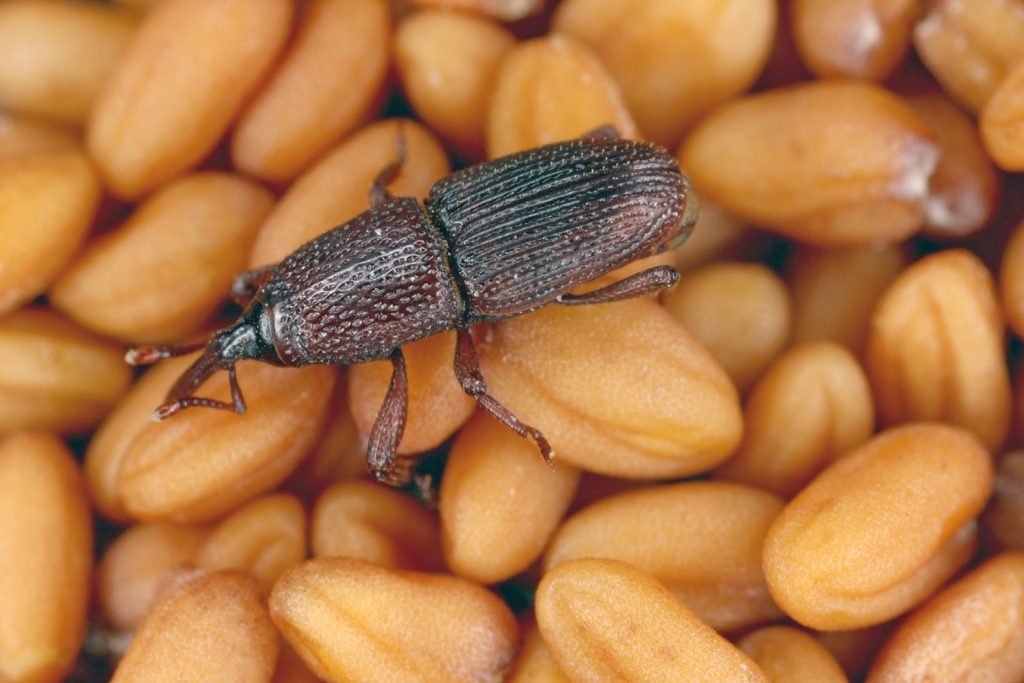
After hatching their larvae, this category of pests lays their eggs on kernels of grains, then bores itself inside the kernel to develop and feed, reemerging as adults. Generally, they are identified during their adult stage outside the grain, or by noticing holes bored into the kernel. The most common of this category are the weevils, with the most common three being the granary, rice, and maize weevils.
While a hole in your malt may indicate pest-affected material, it may not necessarily always mean a pest problem. See our 2016 blog, which refers to holes in malt: https://www.brewingwithbriess.com/blog/holy-chit-who-shot-my-malt/
External Feeders
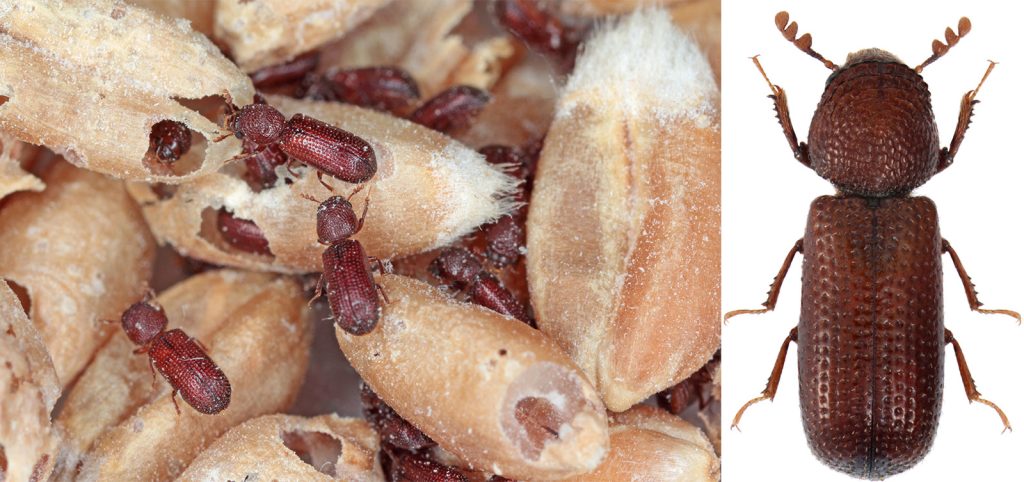
As their name implies, these grain pests feed on the outside of whole kernel grain or milled and broken kernels. Indian Meal Moths and Lesser Grain Borers are common culprits in this category, which you may know and have experience with as common pantry pests.
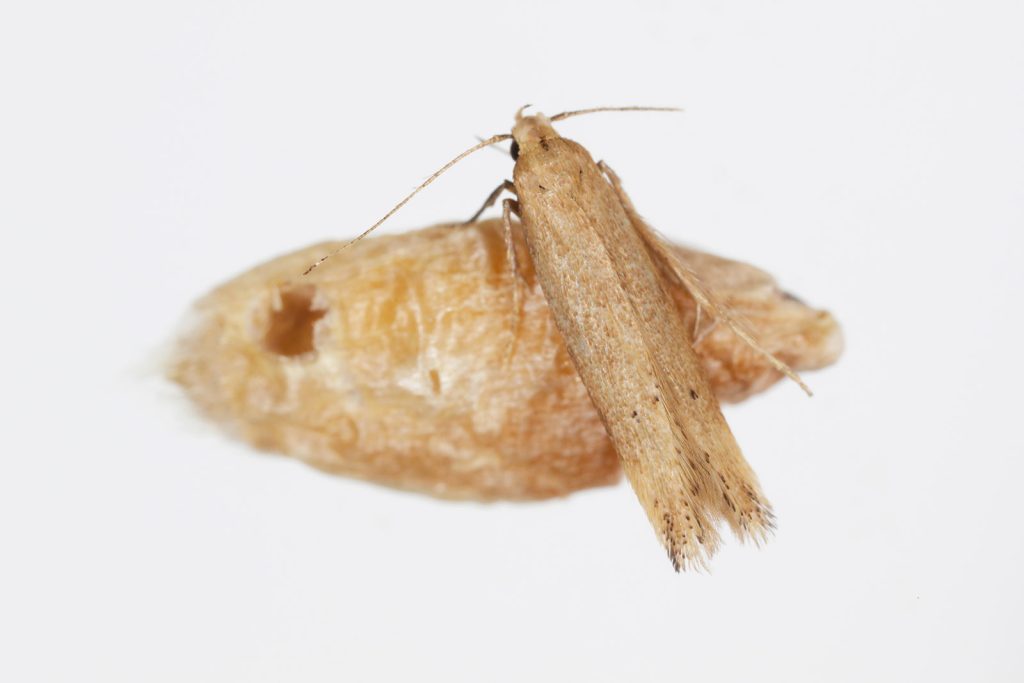
full lifecycle on and inside sound grain kernels.
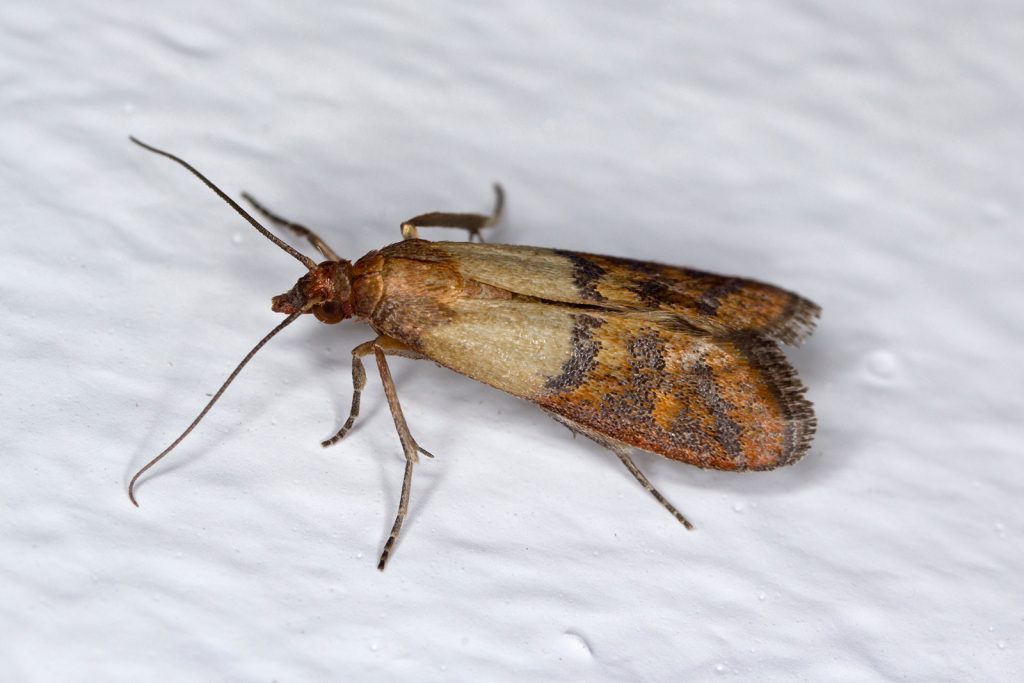
larvae feed on grain dust, flour, and broken grain.
Scavengers
Scavengers don’t feed on whole grain kernels, but instead, on dust, chaff, and flour typically produced by milled grains and milling equipment. Saw-toothed Grain Beetles, Confused Flour Beetles, and Red Flour Beetles are common pests, and extra precautions need to be taken in milling areas.
Mold feeders
While these pests are not the sole consumers of sound grain, they will survive on molds and moldy grains. The broad category of mealworms and their adult counterparts, Darkling Beetles, can be an indicator of a much larger problem, such as moisture intrusions and damp grain.
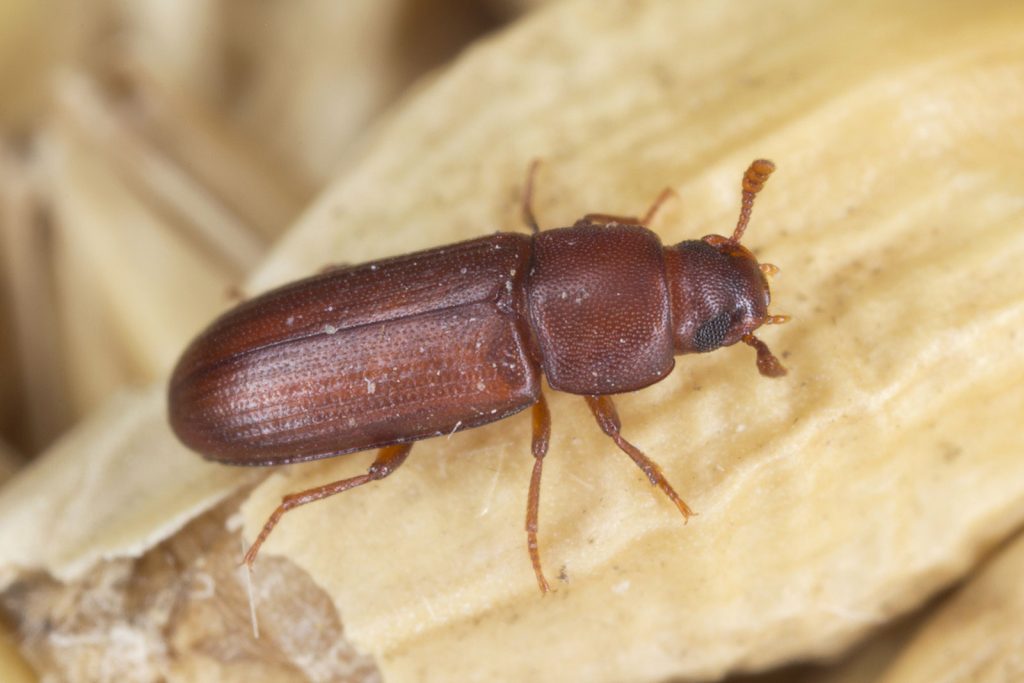
putting uncleaned milling areas at risk while they make themselves at home.
REDUCING YOUR RISK
Storage
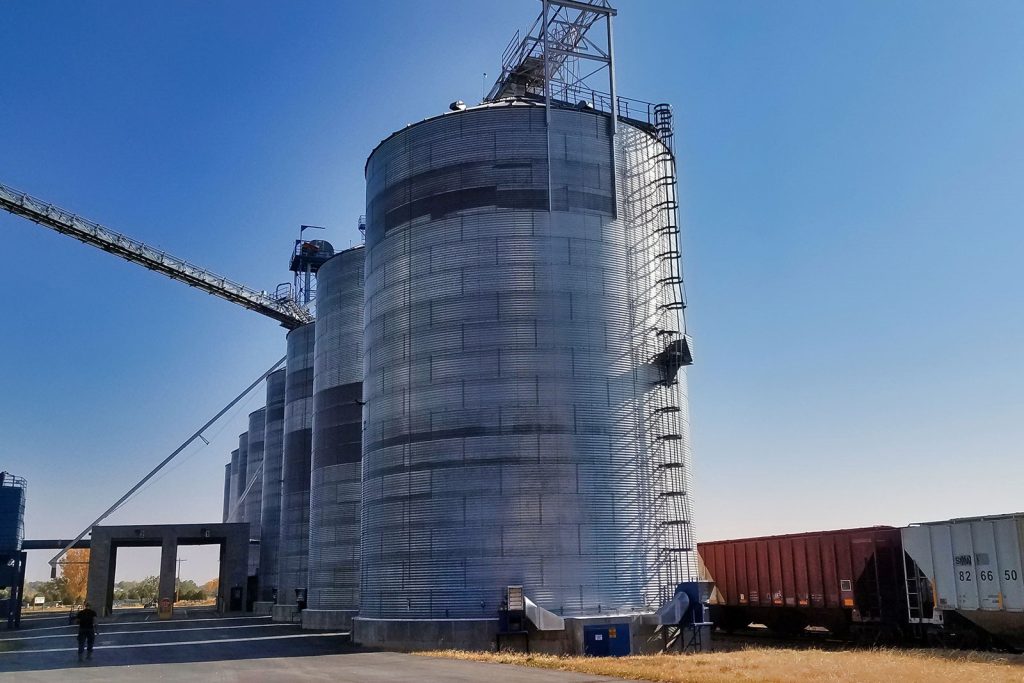
Moisture and temperature are a grain pest’s best friend; keeping your grains in a cool and dry area significantly reduces the risk of pest problems occurring. At Briess, we have the benefit of storing our barley in Wyoming’s arid climate alongside the option to utilize aeration fans following barley harvest, plus temperature cables to monitor both raw barley and finished malt bins.
Inspect
Inspection is the first defense in combating stored pests. Always inspect inbound malts and grains for stored product pests. Be aware of non-typical situations that may happen in transit to the brewhouse, such as punctured or wet packaging. As part of Briess’ quality assurance, every outbound lot and load is inspected by both Operations and Quality teams for numerous quality metrics, including the presence of grain pests.
FIFO (First In, First Out)
Practicing first in and first out within your grain storage system, as to always cycle out older material from the brewhouse, is considered best practice. The longer the malt and grains sit, the greater the risk of being invaded by grain pests. As part of FIFO, cycling bulk storage routinely (emptying bins before refilling), as well as managing proper inventory levels, can help keep your stored malt as fresh as possible.
Sanitation
As with other parts of the brewhouse, sanitation is critical in the grain handling and milling areas. As many grain pests feed on broken kernels, as well as chaff and flour, daily sanitation is critical in these areas to reduce the available “food” to potential pests. The Briess malthouses and facilities are no exception when it comes to daily sanitation and proper grain handling. Briess’ malt plant is certified USDA Organic, Kosher, and uses only Non-GMO barley.
Monitoring & pest control services
Working with pest control services to have routine monitoring and expert eyes on your facility is well worth the cost. Allowing space around pallets of malt and grain storage for multiple points of inspection helps to ensure nothing will be missed.
In general, in a well-maintained and clean brewhouse, there is relatively low risk of stored product pests; however, it should always be a top-of-mind quality consideration. Should a problem arise, always work with your maltster to identify root causes and best remedies.