
Scrapping a product costs money. Hauling waste costs money. Using extra materials costs money. Sustainability can save your business money! With consumers interested in sustainable action, it’s a double win for your wallet and the earth!
Let’s wrap our minds (yes, terrible pun intended) around Briess’ small step for mankind and sustainability – reducing stretch wrap waste!
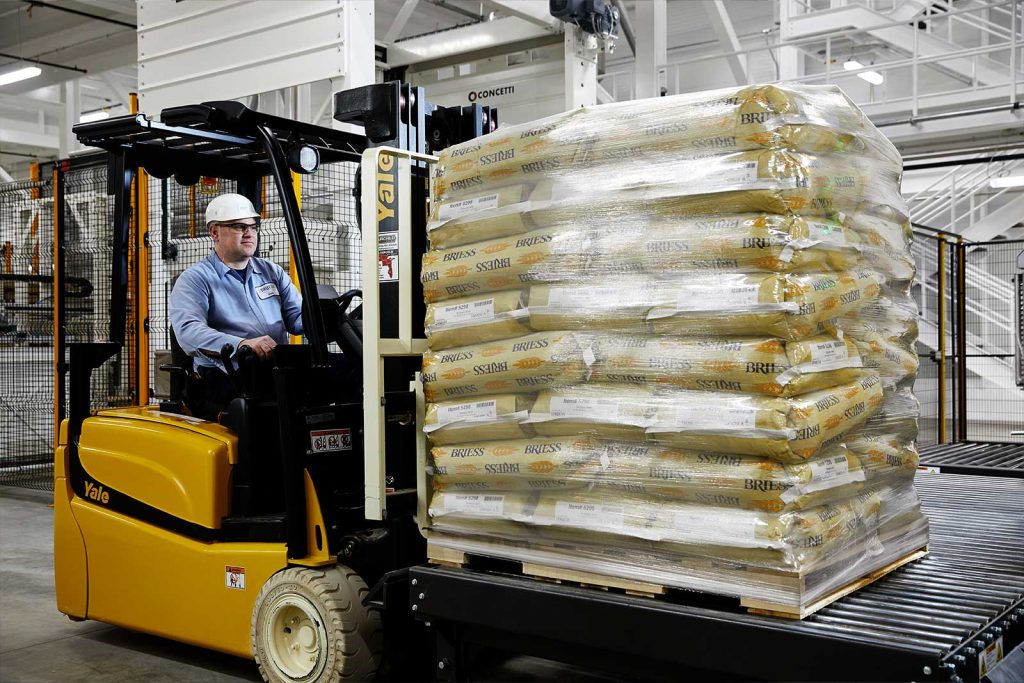
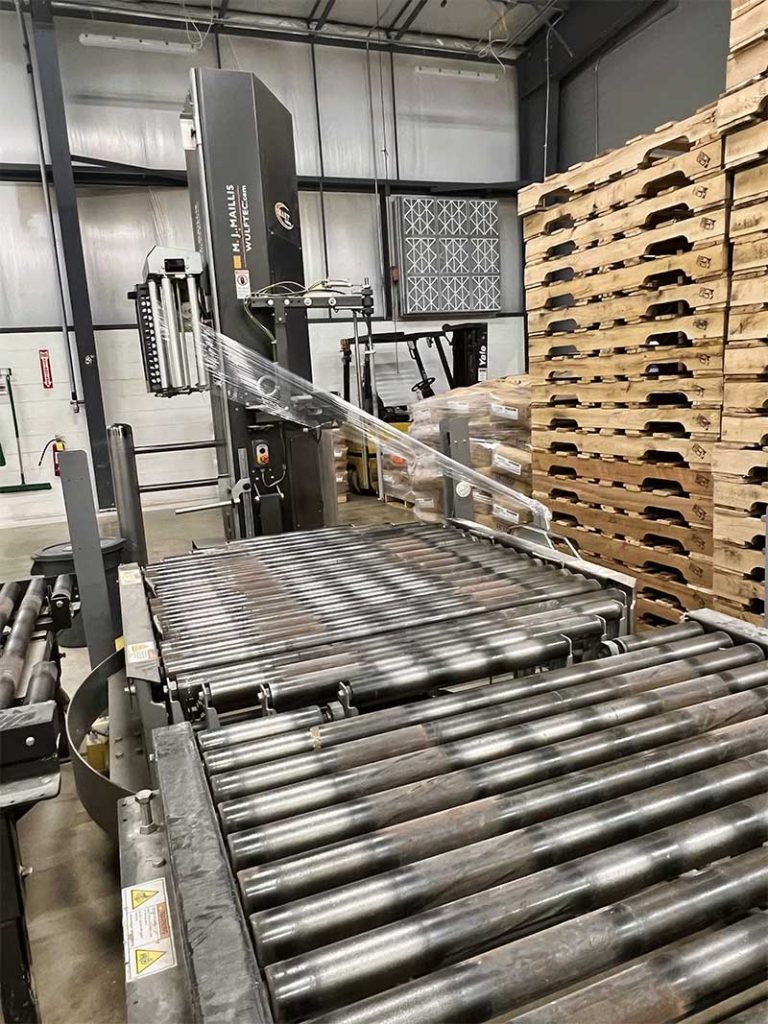
It’s something most industries use and usually an afterthought. Stretch wrap secures pallets of product for human safety and product safety. Our bagged product does not leave our facilities until we have secured the pallet with stretch wrap to ensure the product is riding safely. At Briess, we have automated pallet stretch wrappers and the option to do it old school and run around the pallet with a giant roll of wrap.
Step 1: Identify an Opportunity
Briess team members got together to discuss different ways they could save energy, materials, or reduce waste. In the warehousing and shipping departments, stretch wrap was identified. It touches every pallet, goes to every customer, and has no reuse potential in our chain.
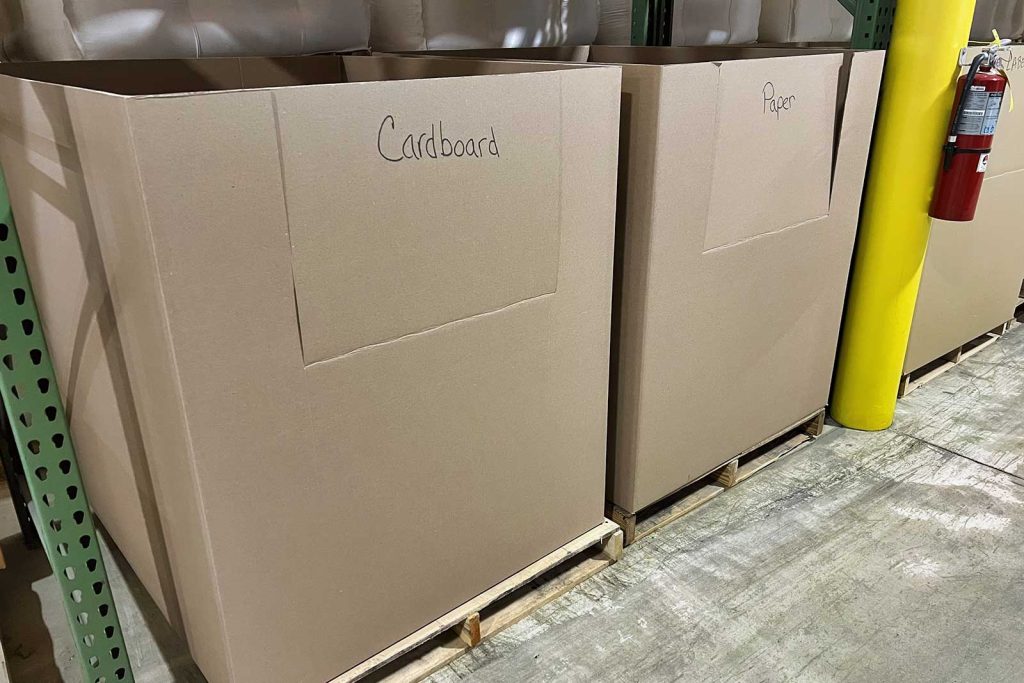
Pro-tip: recycling is great! But not using the material is even better. We don’t recycle plastic wrap in our manufacturing, but we sort and send our wrap off to a long-term partner who can do something better with it than ending up in a landfill.
Step 2: Research the Opportunity
We didn’t know how much stretch wrap was enough. We had a method to our madness that worked, but no one remembered how we came up with the gauge of stretch wrap we used to protect our products or whether we needed that gauge. It was the same story for the number of wraps we did on our pallets, the settings on our wrapper, and the radio station we listened to our rap on…wrong kind of wrap – back to business! The list of unknowns or “we have always done it this way” mindset challenged us to take our wrap to the drawing board.
(For more rap distractions, check out this Wrap Rap! Koo Koo – Bubble Wrap Rap (Dance-A-Long)
Step 3: Hypothesis (because we love the scientific method)
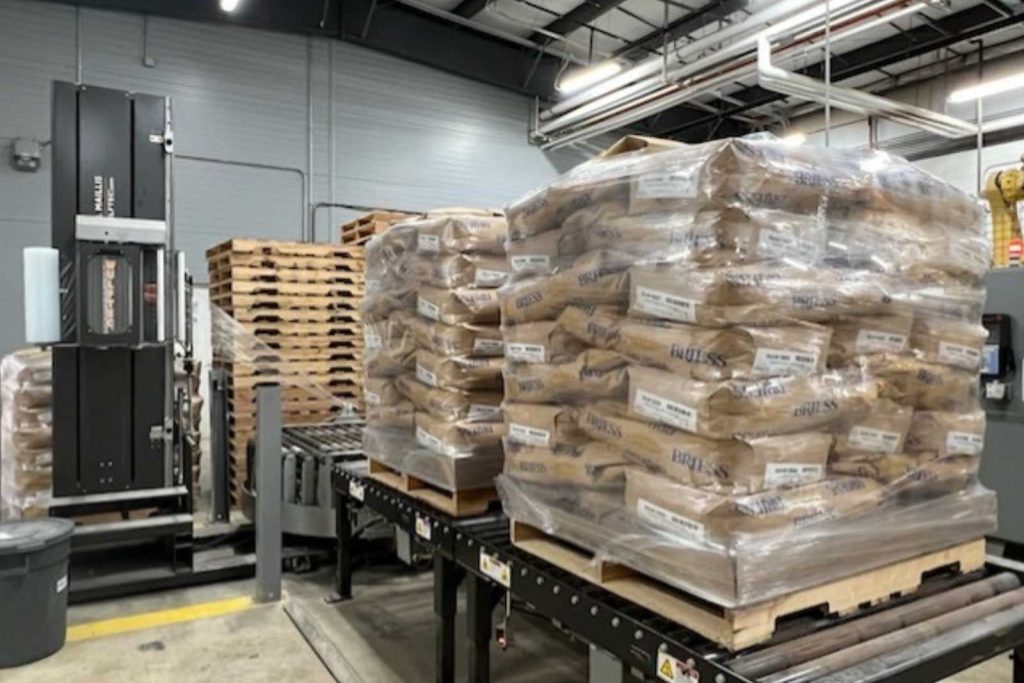
We hypothesized that since we have not seen significant issues in shipping and warehousing our pallets, we likely have some room to reduce our wrap consumption:
a. Decrease the gauge of stretch wrap
b. Decrease the amount of wrap needed to overlap and cover a pallet
Step 4: EXPERIMENT!
Hands down the best part of science! We tested a thinner-gauge wrap with the help of our supplier and some controlled DANGER! (Danger may be too strong a word here…) This involved aggressive forklift driving in a controlled environment for the win (no operators, pallets, or forklifts were injured in testing the wrap). Our pallets were still sturdy, so it was time to test less wrap, not just thinner wrap.
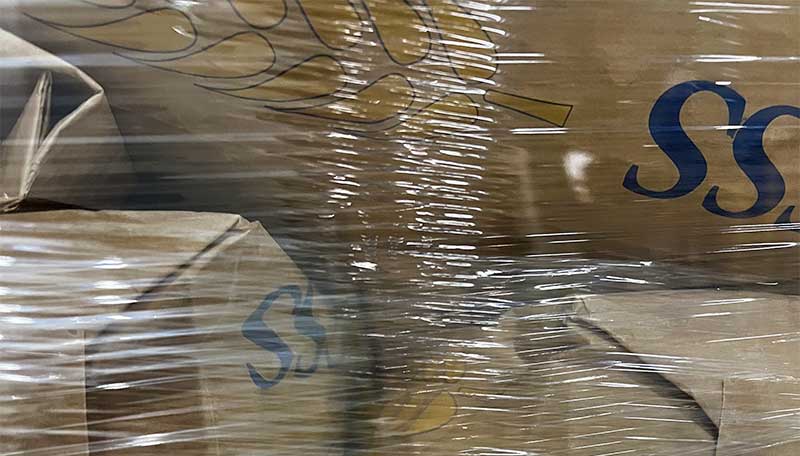
Part of utilizing less wrap meant changing the settings on our stretch wrapper. We changed the speed at which the carriage moved vertically, which decreased the amount of overlap between the widths of the wrap. Overlap is necessary for the wrap to stick to itself and almost create a sheet of wrap. We also increased the tension on our wrap, which increased the hold the wrap was able to give. More DANGER! Another round of controlled environment of aggressive forklift driving, followed by the pallet remaining solid.
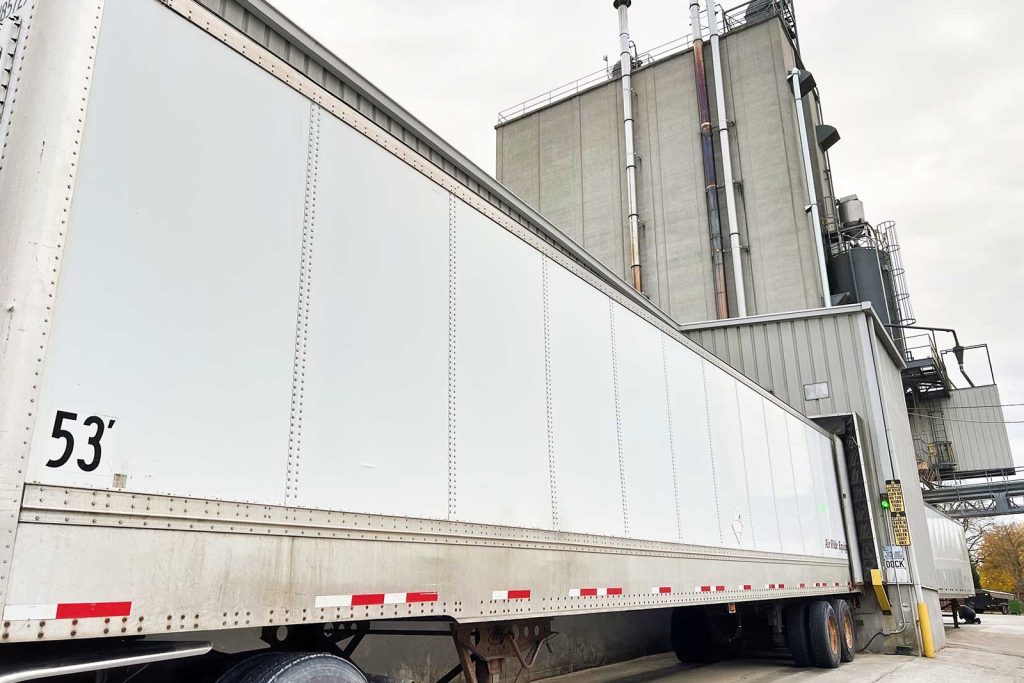
It was time to increase the DANGER! We partnered with our local freight provider. (Shout out to all the truck drivers that allow us to do experiments and honk when they pass local daycare kids on a walking field trip!) With a video camera in the trailer, plus a Briess Team Member and the driver in the front seat, a series of aggressive turns and stops were completed in a controlled environment to simulate a tumultuous cross-country trip. The thinner gauge stretch wrap and decreased overlap held up strong.
But that was not enough – Briess needed to be sure these pallets would consistently hold strong. We partnered with a customer to send our newly thinned wrap pallets coast-to-coast. The Guinea pig customers took a photo upon arrival and sent the pallet back to us. We were able to compare photos of the pallets just being loaded, arrival at the customer’s dock, and after the return to Briess distribution. Aside from different backgrounds, the pallets were unchanged.
Step 5: Analyze the data
In all the experimental tests, we included a pallet wrapped in our standard gauge wrap and standard wrap pattern, in addition to the test condition. In each change, a thinner wrap and changed wrapping tension/overlap, the test condition performed just as well as the control pallet. What do we mean by “performed just as well”? After all the DANGER, the bags were still nicely and neatly stacked without unusual or abnormal bulging in any part of the stretch wrap. Pallet stacks were fully intact for human safety and to prevent damaged packaging from creating waste (and another sustainability issue to tackle!).
Step 6: Communicate
Let’s wrap this up! We communicated our success internally – each plant was part of the experimental phase, so each location had a champion to explain the process to the rest of the Operations team. Our Purchasing team was also already invested in the change from conception, simplifying the communication to be focused on what changes were successful. We let Management know we were saving the earth and dollars, and now we are letting you in on the magic of stretch wrap reduction!
How can you start looking at opportunities to think about the environment and keep your bottom line healthy? Start with walking through your process and identifying:
- Physical waste (think damaged packaging from an issue in the packaging line)
- Energy waste (think conveyors or lights on when someone is not using them)
- Water waste (think cleaning wastewater)
If you have a tight budget, you’ll find that attacking these smaller opportunities will save you money in the long run and help you get closer to some of your financial and sustainability goals.